Say a Little Prayer: A Calathea Survival Guide!
Those glorious bold patterned leaves had me hook, line and sinker. Here are the care tips I've learned from keeping 30+ prayer plants alive — humidity, watering, pest control and the silica secret that changed everything.
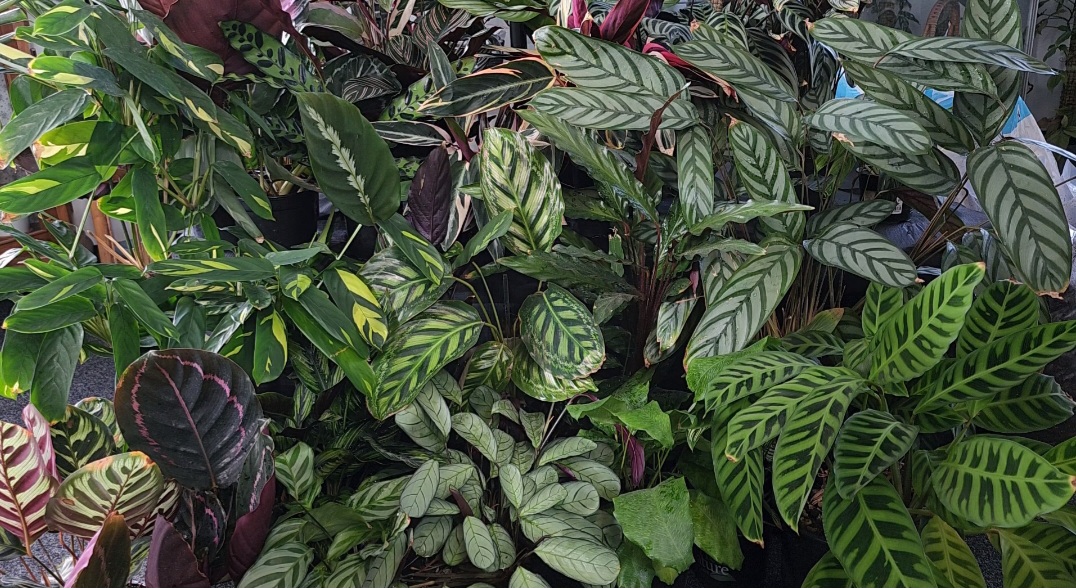
The gorgeous Calathea was one of the first houseplants I truly fell for. The more I collected the more I realized they weren't without their diva qualities. But I wasn't deterred. Those glorious bold patterned leaves had me hook line and sinker.
Calathea, along with Maranta, Stromanthe & Ctenanthe, are part of the Marantaceae family. More commonly called 'Prayer plants' due to the way they respond and move to the suns movements. This process is called nyctinastic movement, during the day they open their leaves to catch the light and at night those leaves lift in 'prayer' as shown in my time lapse below.
Although plant counting has now been banned in my house 🫣 at last count I had around 30 prayer plants, most of which are in my bathroom. I'm often asked how I manage to keep so many of these fussy divas alive. So here I give you the care tips I've found work best for me.
Research will tell you they favour bright indirect light, I've personally found the lower end of that to be favourable - we actually cover our skylight with shade cloth during summer!
Calathea love humidity. The more I added, the more humidity they created, so go ahead and collect them all! The downside to clustering them together en masse is the pest control, namely Spider Mite which Calathea attract like sand to a butt crack. Ensure you have a good insecticide in your arsenal, my go to is Grosafe Groventive (available at Moss & Myrtle). Regular hosing/showering the underside of the leaves is a great pest prevention too. I do this at least once a month and while I'm at it, the entire plant gets a gentle hose and flush. Keep on top of your feeding, my prayer plants love a regular feed of GT Foliage Focus (available at Moss & Myrtle).
It's super important to not let your Prayer plants dry out. I find Ctenanthe a bit more forgiving in this regard (and the least fussy prayer plant in general). A thorough soak and left to completely drain - they don't want to sit in water. Evenly moist is the goal. I allow the top inch or two of media to dry between watering.
Browning tips can be an issue and unfortunately, unless you live in a super humid environment, it will be somewhat unavoidable for some of the fussier, thinner leaved Calathea. The more humidity you can offer the better!
Calathea are sensitive to cold. Most of mine are in the coldest room, which isn't ideal, but to be fair my house never really gets particularly cold. I had noticed near the end of winter that they would start to struggle a little. This changed dramatically with the introduction of silica to my feeding regime - my go to is GT Silica (available at Moss & Myrtle). Silica strengthens plant cells which means stronger resistance to temperature fluctuations among other benefits - liquid gold!
So now that you're armed with a bunch of tips and tricks, don't be afraid to venture into the wonderful world of prayer plants, you will be rewarded many times over for the beauty and fascination they will gift you. X